Showing posts with label travel. Show all posts

Thursday, July 09, 2026

The Lost Voices of Pompeii, by Jess Venner

Cover of The Lost Voices of Pompeii by Jess Venner, with a fresco of a Roman woman incorporated into a red and gold design
For my recent 50th birthday, the Dr and the children took me to Pompeii — a trip I’ve wanted to make since studying the subject at school. They also bought me this new novel, which is an exercise in what the author calls “critical fabulation”, a,

“refusal to treat gaps in the evidence as dead ends,”, 

while seeing,

“absence as production space” (p.18).

This is very much my wheel-house — I’ve written books about absences in the historical record relating to old Doctor Who serials: The Evil of the Daleks (1967), where just one of the seven episodes survives; and The Edge of Destruction (1964), where no production file and very little paperwork survives.

After a scene-setting introduction, each chapter of The Lost Voices of Pompeii follows one of seven people in the 24 hours before the eruption of Vesuvius. There’s some overlap between the lives of Petrinus the slave, Julius Felix the businesswoman, Aulus Umbricius Scaurus the everyman, Umbricia Forunata the matriarch of a working poor family, Euxinus the innkeeper, Amisusius the priest of Isis, and Gaius Cuspius Panda the politician. The structure reminded me a little of 253 by Geoff Ryman, with the same sense of these individual lives connecting into something bigger and more profound.

We see some of the same events from their different perspectives, so understand what a business deal or prayer or shopping trip mean depending on class and status. It’s a good way to explore the intricacies of Roman society. The book is peppered with photographs and footnotes, underlining the fact that this is based on the real, and I found it a bit strange to visit the real-life house of Julia Felix having just read about her.

There’s then a chapter on what happens to these people in the hours after the eruption, and a chapter on the longer-term aftermath. It’s a moving story, but then I also found Pompeii by Robert Harris (2003) and the TV mini-series The Last Days of Pompeii (1984), bits of which we watched at school. 

What’s different is how much more firmly Dr Venner bases her story in fact. That includes some relatively recent new assessments — that the eruption did not take place on 24 August 79, but was later in the year (she suggests 24 October), and that fewer people died than once thought. She gives a figure of between 1,600 and 1,700, or between 9% and 11% of the population (p. 19). (That will be of some solace to Donna Noble, I thought, as we watched The Fires of Pompeii after our trek around the town.)

Dr Venner argues that her “critical fabulation” gives a voice back to the voiceless. I really like the way she explains, in the footnotes, where she’s based things on evidence and where she has embellished things. I can see she’s also tried to make this relevant to now, so there are referencing to upselling, personal brands and so on. I wonder how much those and this fictionalising approach will date over time.

We were in Naples for three nights. On our first evening, we went to the National Archaeological Museum in Naples, where I was stunned by the frescoes. They’re were once displayed like works of art in a gallery, but now they’re vivid evidence of people’s ordinary / extraordinary lives.

Roman cat in a fresco at National Archaeological Museum, Naples

Roman emperor's head draped in plastic during renovation at National Archaeological Museum, Naples

Octopus and fish in a fresco at National Archaeological Museum, Naples

Fantasy scene showing the meeting of mythic creatures in a fresco at National Archaeological Museum, Naples

Fantastic creatures in a Roman fresco, National Archaeological Museum, Naples

Roman statue of a nude man cavorting and a bald man recreating the pose but, thank heavens, with clothes on

Red frescos of a whole room at National Archaeological Museum, Naples

Cheery fresco of a skeleton at National Archaeological Museum, Naples

That was a good grounding before a long, hot day at Pompeii itself. I’d seen photos and footage of the site but being there I was knocked out by the scale — a whole town, with main thoroughfares and back streets, whole chunks of it still buried. Waiting in a shady spot at one end of the forum for the Dr to catch us up, it struck me that it was of a similar scale to the Winchester, where I grew up, once a Roman city.

A woman stood outside the House of Caecilius in Pompeii

A girl using the stepping stones to cross the Via dell’Abbondanza, Pompeii

Two hot children take shelter in shade with view of the forum in Pompeii

Bald man selfie, view of Pompeii behind and below him

Frescos in situ in a house being excavated in Pompeii

Ruins of bath house in Pompeii, Vesuvius in distance, the Dr larking about

Fresco in the Villa of the Mysteries, Pompeii

The following day, we explored Herculaneum, which I think the children preferred because there were fewer herds of tourists and more cats. 

Panoramic view of Herculaneum

Bald man in sunglasses in front of brick portico in Herculaneum

A cat snoozing in Herculaneum, too hot to chase the nearby pigeons

The Dr has written her own blog post about the trip, “What remains of humans: Casts in Pompeii.”

A woman and two children enjoying a view of Naples at night, Vesuvius in the background, from a rooftop in Garibaldi Square

Sunday, June 02, 2024

Athens

Two children looking through window at Acropolis, Athens, at night
View from our hotel
Back from a nice week in hot, sunny Athens. As the Dr said, it's been fascinating to see what the kids made of the place and how different it is when seen through their eyes. They were wowed by the Acropolis and the Acropolis Museum. A morning on a nice beach or somewhere shady to run around was as big a win as the culture. Trying a new fizzy drink - Loux Sour Cherry - or the delighted response from waiters when, unbidden, they said "thank you" in Greek, was all part of the adventure.

Highlights of the trip for me were the things that engaged them. That includes staff at Manchester Airport spotting my son's sunflower lanyard and quietly, conscientiously making things a little easier for us all. Aegean Airlines were incredibly accommodating with families, such as ensuring that children on the flights got fed first and providing colouring books and card games. 

Really, there was only one sour note to the trip. The Acropolis was very crowded and the narrow path up to it a bit of an ordeal, with many other tourists not behaving well - shoving past my daughter, standing on my feet so often I had to wash blood from my sandals, and ignoring ropes and signs closing off various bits of the site. It may just be that our pre-booked, mid-morning slot coincided with all the coach trips.

Other sites - the Temple of Olympian Zeus, Hadrian's library, the Greek Agora and its Roman counterpart - were bustling but less of a scrum. In contrast, we ducked into the Museum of Modern Greek Culture to escape from the sun and had the place pretty much to ourselves. It was a revelation, the various themed exhibits holding the children's attention for two hours.

I was wowed by the Acropolis Museum, where me and Lady Vader completed a treasure hunt of different representations of Athena and then had various games and activities. For the latter, we found a quiet corner on the second floor, where there's the awe-inspiring recreation of the Parthenon frieze and other ornamentation made up from original stonework and casts of the purloined pieces. 

Child playing card game at Acropolis Museum, Athens, view of Acropolis behind her
As we sat there, passing tourists kept voicing the same thought: once you see this incredible display, with the windows looking out on the Acropolis itself, it's hard to fathom how the British Museum can possibly object to sending its own bits of the Parthenon home.

(The Lord of Chaos was much taken by the Lego version of the Acropolis on display on the floor below, where a pith-helmeted Lord Elgin can be seen nicking some of the sculptures - boo, hiss). 

For all we explored the ancient past, we were also tracing more recent history - the corner of Syntagma Square where, in 2000, I first met the Dr's aunt and uncle (then residents of Athens, now sadly deceased), the bit of Monastiraki where in 2007 we whiled away an afternoon with my parents in a bar overlooking the Agora. I first went to Athens on a fancy school trip in 1989, when I was the same age as my son is now. Our trip to the Museum of Modern Greek Culture made me especially sensitive, I think, to that idea of interwoven, personal history.

At the same time, the coach-loads of tourists from America, Australia, Japan and wherever else make a different case. The Acropolis Museum focuses on the Greek history and the birthplace of democracy but there's little on why so many modern states trace a line back to this city, and how the ideas originated in Athens have been adapted. Uncivilised by Subhadra Das points out that ancient Athenians wouldn't recognise our modern political systems as "democratic"; I'd have liked to have seen more of the present in reading the past.

Silly man posing at sign saying House of Simon
House of Simon
But the future was also on my mind. As we wandered the Agora looking for the House of Simon, in the shelter of the gnarled olive trees stood individual staff members on duty. Several had fire extinguishers with them. At the end of May, it was a knackering 30℃ and the full heat of the summer is still to come. 

A history at once personal, universal and so very fragile.

Sunday, March 24, 2024

Mad Sisters of Esi, by Tashan Mehta

Sisters Laleh and Myung live deep inside the Whale of Babel, but can pass from this extraordinary, vast creature into other worlds. But Myung has a wanderlust to explore these worlds more fully and meet other people, which means abandoning her beloved sister. There's also the enigmatic legend of Great Wisa to make sense of... 

On another world, in another time, Magali Kilta and her adopted sister Wisa are strange in different ways. Magali glimpses moments of the past and future while Wisa can speak to animals and trees. These powers must be kept very secret on the island of Esi, as the locals are terrified of the forthcoming festival of madness, where other worlds and realities bleed into their own. Those suspected of early signs of insanity are hounded out of the community or even killed. 

Via ghosts, legends, dreams, and fragments of history and memory, we piece together how the two pairs of sisters are linked, and all they've been through and lost...

I've been entirely enchanted by this strange, rich and imaginative fantasy told on an epic scale. It's beautifully written and full of characters who feel real, for all they dwell in the most incredible, fantastic realms. These places are vivid and tangible, full of tastes and smells and textures.

There's plenty of suspense to keep the reader hooked. Myung visits an island called Ojda, not knowing (as we do) that her guide Blajine is plotting to kill her. In the years and months counting down to the festival of madness on Esi, there's an ever-growing threat of violence borne from the community's fear of insanity being infectious. As madness blooms across the island, things are especially tense - and strange. I couldn't put the book down.

There's plenty, too, on the way we are shaped by ghosts of the past and the stories we tell ourselves. At a critical junction, one pair of sisters is not reunited because one of them, having heard the full story, bitterly rejects the other, who then makes sense of why:

"I am the right person, just not the same person. It is what happens when you wait for someone to come back to you or you make a map to go somewhere you once loved: they change. Nothing is ever as you left it. ... She disappears. I want to follow her, but I know it won't help. I ache for her. Centuries of waiting and [one of the sisters, but I won't spoil which one] cannot greet me because it is not as she imagined it. Centuries of holding on to a ghost of herself, only to learn it was never going to be like it once was." (p. 389)

What really stays with me is the way time and experience bring perspective to so many of these characters, and to the reader. In the closing pages, the whole thing comes together so that we understand all the connections. It's at once satisfying and sad, the fragments knitting together to make sense of these different sisters, and the love and loss inside them.

Monday, June 27, 2022

Still Life, by Sarah Winman

Ulysses Temper is a British soldier in Italy during the Second World War. There he befriends art historian Evelyn Skinner, and helps her rescue paintings from the conflict. We follow Ulysses home to austere, post-war London, to discover that his wife Peg has had a baby with someone else and now wants to divorce him. Ulysses bonds with his ex-wife's daughter in a way Peg never has, and when he returns to Italy the girl goes with him. Around them flit and linger other lives, a cast of misfits variously longing and grieving and muddling things out. Along the way there are musings on fate and art and love, and a sense of the muddle slowly being worked out...

I loved this strange, big-hearted ramble of a book, its vivid characters, its love of life and the echoing horror of loss. The death of one kindly character late on hits extremely hard. How fitting, too, to fall into a novel all about passion for the art of Urbino and Florence as I drove to the memorial for my old A-level Art History teacher, who on Friday afternoons more than 30 years ago shared his joy at Giotto, Uccello and Massaccio.

Wednesday, June 22, 2022

CERN: Science Fiction and the Future of Detection and Imaging

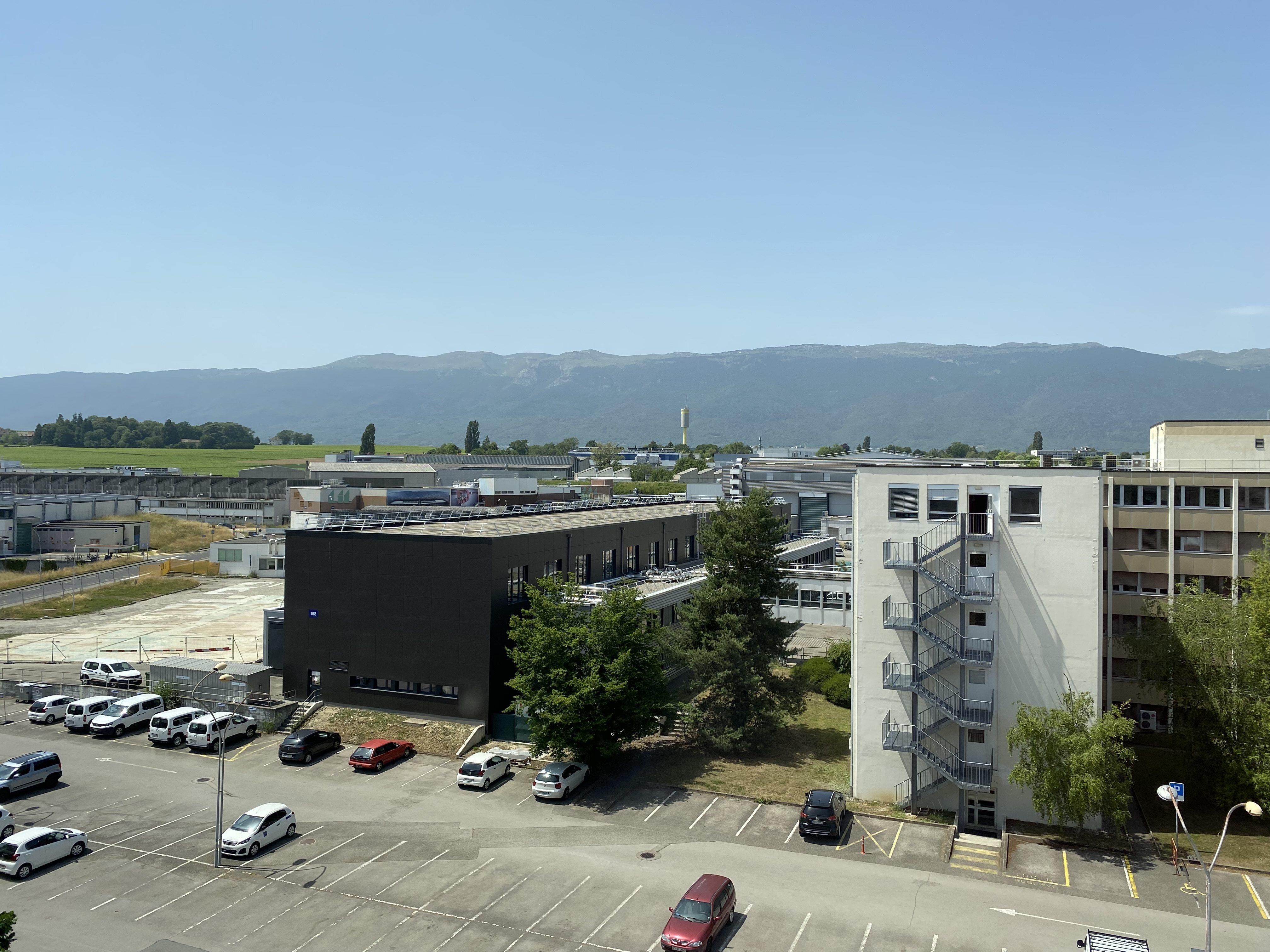
I've had the most amazing few days in Geneva as a guest of Ideas Square at CERN. It's the first time I've been out of the UK in three years, and I was jangly with nerves for a good week before setting off; I'll be jangly with excitement about it all for some time to come.

During lockdown, my friend Dr Una McCormack roped me into some online sessions where sci-fi writers (hello!) were brought in to help / hinder the work being done by students from round the world in attempting to imagine the future impact of technology. This week, a bunch of us assembled in person, got a tour of the Large Hadron Collider and other CERN bits and bobs, and had lots of really interesting chat about, well, everything really. There was high-end physics, and high-end gossip, and high-end physics gossip.

I've returned home with pages and pages of notes in my notebook - bits of new ideas, lists of things to read or look into, random bits of detail. For example, one thing that boggled my brain was that work on constructing the CMS detector (one of a number of detection instruments located round the Large Hadron Collider) was delayed by the discovery of Roman ruins on site which then had to be painstakingly excavated. I'm taken by the Nigel Kneale-ish thought of ancient ghosts being picked up by the sensitive detectors...

Then there was the fact that when building this underground facility the team had to dig through a subterranean river. To do so, they dug down to the level of the river, then froze it and dug through the ice, constructing a concrete-lined shaft through the middle before letting the ice thaw. Ingenious!

And how extraordinary, how liberating, to discover that in visiting the CMS we had crossed the border into France without a moment's thought, let alone all that mucky business with passports. Coming home, there weren't enough ground crew to let us off the plane so we sat stewing for 45 minutes. There must be a better way of doing things, I thought. Which was exactly the sort of thing these few days have been about.

Here are a few pictures...

View of mountains from CERN hostel

Geneva tram, for my father-in-law

More mountains, plus v hot writer

Tour of the CMS facility;
photo of detector like a gothic rose window

Going underground

Warning signs to give one pause

The LHC creates a magnetic field;
look at its effect on these paperclips!

Doctor U and her plucky assistant

New hat / cool museum

Hot, hot evening, and yet snow on the mountains

Marie Curie clearly delighted to meet me

Very heavy lead,
so dense it would shatter to dust if dropped
Arty reconstruction of CMS, using mirrors
 (cf Maxtible in The Evil of the Daleks)

Old-skool, pretty wiring in old device

Where the web,
and so much of my life, began

Cool retro tech in a garden

More cool, retro tech

The Champions
(ie me, Una McCormack and Matthew De Abaitua)


Sunday, November 14, 2021

In Search of HV Morton, by Michael Bartholomew

This is a very good biography of a very successful writer and pretty awful human being. Michael Bartholomew brilliantly teases out the real man from the literary persona, effectively providing biographies of two people: the real Harry Morton and the invented HV.

Morton's most famous work is In Search of England (1927), in which he escaped London for excursions in a bull-nosed Morris. Bartholomew makes the point that the title suggests this England had become hidden or lost and so had to be sought through its countryside and history. He goes on that this struck a chord in a nation still reeling from war. He also points out that the final destination in the book, a village in which Morton finds this England, is almost certainly a fiction. As he says, there's a subtle but important difference between a myth and a lie... I'll return to this when I reread In Search of England.

Bartholomew is aided by a wealth of evidence which any researcher would envy (me included). HV Morton published more than 40 books, almost all of them non-fiction, often recounting his adventures with wry, self-deprecating insight. Many of the books were collections of reports for newspapers (and, later in life, features for glossy magazines), with telling differences between what was originally printed and what was then revised. That would be quite enough, but Bartholomew also had access to a 200-page unpublished autobiography written in Morton's last years and a collection of diaries and correspondence ranging right back to his earliest days. This means the biographer is able to compare a diary account of a formative experience with how Morton chose to remember it a half-century later, and then contrast this with the version put in print. There is even a dated list of Morton's sexual conquests, totalling some 100 different individuals, with "wh" marking those that he paid for, which Bartholomew matches against the other details in his timeline.

There are plenty of gaps in the record - missing diaries, absences in what Morton tells us - and Bartholomew is good at deducing connections, motives, feelings. He also tells us when it's his own speculation by adding "I think", as well as saying when nothing firm can be said. Literary biographies can all too often be an annotated list of published works, reductively pinning down real events that inspired the writer, as if writing is little more than copy and paste. Bartholomew achieves something very different - and better. Morton is more than simply a witness: we come to understand the creative act, even in non-fiction. There is careful research beforehand, skilled observation at the time, a period of reflection to put things in perspective, and then craft in the actual process writing - from moulding loose events into a story, to the striking turns of phrase, the well-chosen idiom or analogy, and the deftly worked light humour.

A good example of this use of different sources is what Bartholomew can tell us about a particular photograph, chosen for the back of the dust jacket:


The photograph is also included in the plate section of the book, with the following caption:

"The opening of Tutankhamun's tomb in 1923 -- Morton's first big break as a reporter. The photograph was taken by the Times photographer. Under armed escort, treasures are being removed from the tomb. The figure leading the way is the official archaeologist, Howard Carter. The figure on the extreme right, furtively shadowing the party and taking surreptitious photographs, is Morton. When the photograph was published in The Times, Morton, the interloper, was cropped from the image."

The next plate is the front page of the Daily Express for 17 February 1923, with Morton's coverage - "Pharaoh's Coffin Found" - the first headline. Bartholomew follows the thread of Morton's early passion for archaeology and friendship with antiquarian GF Lawrence, how this helped him get the Tutankhamun gig (the Express determined not to let the Times have a monopoly on the story), the effect this trip had on Morton and how it all tied in to the historical perspectives in his later books.

It's interesting to read that, while waiting to be sent out to fight in the war, Morton was stationed in Colchester and involved in some excavations of Roman finds there. This was also true of the archaeologist Mortimer Wheeler. There's no mention of Wheeler in this book, or of Morton in Jacquetta Hawkes' biography of Wheeler, and perhaps they never overlapped in life. Yet it strikes me that these womanising rogues had a lot in common, and Wheeler had a similar way of making direct connections to the ancient past. During excavation of Maiden Castle in the 1930s, Wheeler's brilliant deductions about the stages of a Roman siege were informed by his own battlefield experience in the war. Yet I wonder if the two men would have been at cross purposes: Wheeler using modern experience to unpick the truth of history, Morton looking to the past to provide a modern fiction... I'll keep an eye out for references to Wheeler in Morton's books.

Bartholomew has an eye for wry humour, such as when he details a break-in at the office young Morton was renting with a friend so that Morton could write a novel and the friend a play. 

"The project petered out, before Morton had completed chapter one, when a burglar broke in and made off with the kettle, tea and biscuits, but disdained to steal the manuscripts." (p. 82)

We also quickly get a sense of Morton's character, his presence in any room. While I envy Bartholomew his wealth of evidence, I wonder how much he enjoyed the time spent with his subject. Morton's insecurities and womanising are exhausting from the off but the racism creeps up on the reader. True, his travel writing is full of caricatures - there are often salt-of-the-earth yokels or idiot Americans for his narrator to converse with - but Bartholomew is good at showing how often Morton plays against easy stereotypes and presents a more complex view... at least in his published writing. In private, he's often shockingly racist, continually sympathising with the Nazis during the war and then emigrating to South Africa just as the apartheid regime came in.

Bartholomew confronts this head on and at some length: 

"For him to to have persisted with a rosy view of fascism, long after others had seen the light, indicates more than naivety." (p. 172)

He also points out the contradictions in Morton's prejudice: this man who made his name celebrating England actually despised much of its people and ways of doing things. Morton sympathised with and admired the Nazis and assumed they'd win the war, and yet was also a dedicated leader of a Home Guard unit, expecting to die with his men in token, doomed resistance to the inevitable invasion.

There are other ironies, such as - "improbably", as Bartholomew says - when the Labour Party published a pamphlet by Morton, What I Saw in the Slums (1933), with a foreword by party leader George Lansbury. Bartholomew makes the case that George Orwell surely read this ahead of his own, better known, The Road to Wigan Pier (1937), and even argues that of the two, Morton is the more sensitive and egalitarian.

"Morton's own descriptions of women are just as powerful [as Orwell's], and are less patronising. He writes, for example, of women who strive to put a symbolic barrier between their home and the even more squalid street beyond, by whitening the doorstep: 'Thousands of horrid doorsteps, worn as thin as wafers in the centre, are whitened or raddled. Every time a door opens you see a woman cleaning something.' What I Saw in the Slums is an impressive little book." (p. 147)

Bartholomew is no less impressive. There's lots that's uncomfortable in Morton's life - or parallel lives - but the story is well told. Note to self: this is how it's done.

Saturday, July 11, 2020

Tintin, by Herge

The Adventures of Tintin boxset
I’m struggling a bit with prose for grown-ups, so over the last month worked my way through The Adventures of Tintin, an eight-volume box-set of the boy reporter’s collected scrapes, including the early, rough Tintin in the Land of the Soviets and the unfinished Tintin and the Alph-Art but not including the especially racist and colonialist Tintin in the Congo from which even Herge distanced himself. (The book is available to buy separately.)

My parents still have a bunch of Tintin books that I shared with my brothers. In my head they were always more my younger brother’s but I’m surprised now to discover how few of them I’d read. Running gags, such as the telephone being put through to the butcher, or insurance salesman Jolyon Wagg outstaying his welcome, seemed completely new.

I was also surprised by how funny so much of it is, having thought of Tintin as the po-faced cousin of Asterix, to whom I was devoted. But there’s loads of often very funny slapstick here, whole sequences of panels passing without a word. I wonder what it owes to the comedy of silent film.

The pace is also striking. Written as a newspaper strip but reformatted for book versions, each story licks along at great speed, full of incident and twists. There are plenty of cliffhangers - though, as with so many adventure serials, many of them are undone by outrageous good fortune or sleight of hand on the part of the author. Still, it’s exciting and fun.

And it looks beautiful. Herge's clean line style with no shading and flat colours means that strips that are nearly 100 years old reproduce nicely, and look fantastic on shiny, good quality paper. The style suggests cartoon-faced people in an otherwise convincingly realised world - it's both daft comic strip and gritty realism at the same time. 

But also striking is the racist stuff. Even without Tintin in the Congo, there are plenty of crude racial and cultural stereotypes, perhaps the most jaw-dropping in The Broken Ear when Tintin blacks up. 

Tintin blacks up in The Broken Ear

Having nominally bought the collection for my nine year-old son, I started to have second thoughts - and  I’m not the only one. On 10 June, just as I was reading this, Amol Rajan was on BBC News to talk about Gone With the Wind being removed from Netflix - just a day after he’d been on to talk about the more recent comedy Little Britain coming down from iPlayer.
“That is fraught with difficulty. Where does it stop? I'm reading Tintin with my son at the moment and an exhibition of tolerance it certainly is not. It reads like one long parade of racial cliches.” (Tweet by Amol Rajan, 10 June 2020)
He’s right, and there’s plenty here that made me uncomfortable - not least in those books that I'd read before without noticing this aspect. How strange, too, for a series of adventures for children to feature opium dens, slavery, alcoholism, kidnap and murder. I think Herge’s clean lines and flat colours, plus the slapstick stuff, are deceptive: Tintin’s a noble character in a world that is corrupt and cruel and dangerous.

Without wishing to excuse or downplay the racist depictions here, there’s clearly also an attempt to offer more nuance and counterpoint, such as in this sequence from The Blue Lotus where Tintin and his friend Chang try to dispel a few cultural myths.

Dispelling cultural myths in The Blue Lotus


I wonder how much of this is later revisionism. There’s clearly some of that going on. The jump in style between Tintin in the Land of the Soviets and the next book, Tintin in America, is so marked because the latter was redrawn. There’s evidence, too, that the revised books weren’t published in their original order. In Cigars of the Pharaohs, in volume 2 of this collection, Tintin is recognised because someone has a copy of Destination Moon, which is in volume 6.

Tintin the celebrity in Cigars of the Pharaohs


(This also suggests that Tintin is a celebrity because of his adventures, and the accounts of them exist in his own world as colourful comic books, too.)

My guess is that this moment in King Ottaker’s Sceptre is also a later edit, perhaps after someone wrote in:

Which Ottaker is which in King Ottaker's Sceptre?


Anyway. There’s a notable shift in gear with The Crab With the Golden Claws, which feels more mature and better plotted, and introduces us to the brilliant Captain Archibald Haddock, a drunk old sea-dog with a heart of gold. Part of what makes this story feel epic is where it breaks the newspaper-strip format, with full and half-page panels. When these happen out in the desert, the effect is like suddenly going widescreen, the adventures directed by David Lean. Again, it’s a story about drug-smuggling and there are racial caricatures, but Tintin solves the mystery using pluck and intelligence rather than good fortune.

After the disappointing The Shooting Star (an odd one about an alien island that produces huge mushrooms), we’re onto what’s surely the classic pairing - The Secret of the Unicorn and Red Rackham’s Treasure. I knew this one well and it’s a really good mystery, greatly helped by the focus on Captain Haddock. In Secret, we’re told the year is 1958 which came as a bit of a shock reading the adventures in sequence. Some 30 years have passed since Land of the Soviets and Tintin and his dog have not aged a day. It turns out that the original version of the strip was published between June 1942 and January 1943, so this is again another revision for the collected version. More than that, the stories have existed in a kind of timeless state. While Tintin in America mentioned Al Capone by name, we’ve had little sense of the real world. There has been no mention of the Second World War, the occupation of Tintin's native Belgium or that anything might have changed. I’ve since looked this up and see that The Crab With the Golden Claws was the first that Herge wrote while under occupation, and it’s tempting to try and see the gear-shift in the storytelling as some kind of response to real-world events. I’m not sure, but would like to know more.

Secret ends with Tintin directly addressing the reader to say the story is continued. Red Rackham’s Treasure begins with various suitors claiming to be descendants of the notorious pirate to get in on the treasure hunt. One of these, apparently as a sight gag, is a black man with very dark skin and big lips - so this kind of racist caricature isn’t only part of the early days of the series. On page 186 of my edition, we’re given the date Wednesday 23 July, suggesting this is still 1958.

There’s more continuity cock-up in The Seven Crystal Balls where we’re told of Bianca Castafiore that,
“she turns up in the oddest places: Syldavia, Borduria, the Red Sea… She seems to follows us around!” (p. 13)
But this is only the second time we’ve met her, and The Red Sea Sharks is in six books’ time. On the next page, General Alcazar seems to have met Haddock before, but Haddock wasn’t in that previous adventure at all. Land of Black Gold then features two more characters returning from previous books, and depends on a lot of coincidence. The books keep finding dramatic new locations round the world, but feel increasingly repetitive.

Then there’s something very different with Destination Moon and Explorers on the Moon. This strip originally began in 1950, well ahead of the Space Race, and it's fascinating that neither the US nor USSR are the first to get to the lunar surface. The rocket here is, apparently purposefully, reminiscent of the Nazi's V-2 rocket, even down to the distinctive red and white check. That surely makes Professor Calculus a comedy version of Von Braun. Again, there's no mention of Nazis, the shadow of occupation or the Cold War that followed - and was in the background as this story was written. Tintin is the first human to walk on the Moon but this extraordinary historic moment happens outside of time.

Herge took pains to get the details right, and it's fun to see a spacecraft built to accommodate the fact that its crew would all be knocked unconscious by G-force. The astronauts speculate about the formation of craters (we now know they're created by impacts), and land and drive huge, heavy vehicles on the lunar surface that would be far too massive and costly to get there. I was also taken by the science they actually conduct:
“EXTRACT FROM THE LOG BOOK BY PROFESSOR CALCULUS
4th June - 2150 hrs. (G.M.T.)
Wolff and I spent the day studying cosmic rays, and making astronomical observations. Our findings have been entered progressively in Special Record Books Nos. I and II. The Captain and Tintin have nearly finished assembling the [reconnaissance] tank.” (p. 98)
They set up an observatory and a theodolite, and drive round in an enormous tank. And then they discover a huge cave system. Surely, surely, the moment Tintin lets go his safety line and drops into the abyss to rescue Snowy is an influence on Doctor Who doing the same in the The Satan Pit (2006).

Tintin falls in Explorers on the Moon

The Doctor falls in The Satan Pit


So much of this is jaw-dropping, remarkable and new. Really, my only problem with the Moon story is the villain, who returns from King Ottaker's Sceptre in a simple revenge plot, while a rival bunch of scientists eavesdrop on what Tintin is up to. It feels inconsequential.

Once they're back on Earth, Tintin is recognised as the first person to walk on the Moon in several of the books that follow. The Calculus Affair is set on Earth but feels no less huge given that Professor Calculus has - as well as all his technology for getting to the Moon - invented a super weapon. There's a chilling moment when we see a city destroyed, though it proves to be a model for demonstration purposes. Even so, this analogy for the Bomb is really effective. At one point, we also spot a book, "German Research in World War II", the first time the Tintin series references the conflict.

Tintin in Tibet (serialised 1958-59, book version 1960) seems quite similar to Nigel Kneale's Yeti stories - his TV play The Creature (1955) and the movie version The Abominable Snowman (1957) - and I wondered if Kneale had been an influence. Here, Tintin is on the trail of his friend Chang, last seen by us in The Blue Lotus - 15 books previously, and first published in the 1930s. Clearly, not so much time has passed for the two young friends. Tintin now seems to have a psychic ability, knowing innately that Chang is alive and in need of saving. Psychic powers seem permissible when he's among exotic natives.

The Castafiore Emerald is on a much smaller scale and set largely at Haddock's home, Marlinspike Hall. Haddock is not the most patient or progressive of people but is horrified by the treatment of a group of Travellers nearby and offers them land on which to camp. They are then suspected when Bianca Castafiore is robbed - playing into racial cliches. Yet Tintin maintains that the Travellers are innocent, even when evidence suggests otherwise. It's Herge trying to play against racist assumptions but there's no challenging of or comeuppance for the prejudiced authorities, and the Travellers leave without a word. The story's heart is in the right place but it's odd. The culprit turns out to be a bit of a joke, and there's little sense of the injustice done to the Travellers. In fact, a missing watch rather invites us to suspect them, too.

Flight 714 to Sydney involves the return of a whole load of friends and foes from previous books, and the plot reminded me a lot - and not in a good way - of Indiana Jones and the Kingdom of the Crystal Skull. There are more returning characters in Tintin and the Picaros, including characters not seen since all the way back in The Broken Ear. If that's not very original, the story is full of suspense - our heroes walking headlong into a gilded cage, and a great sequence at the end when they get caught up in a crowd as they race to save the Thompsons from execution.

Our last sight of Tintin is in a tiny panel at the top of the final page. We then hear him on the final row, a speech bubble snaking away to a departing aircraft. And that's it: a rather understated end to his adventures and a great shame. For all the repeated jokes and perils, and the myriad returning characters that are hard to keep track of, it's all still fun - and now and again really thrilling.

The collection ends with Herge's script and rough sketches for two-thirds of Tintin and Alph-Art. It's fascinating to see his process, and the difference between the roughest of rough sketches and the couple of examples or more carefully realised outlines. The story itself is quite different from what's gone before - involving a celebrity modern artist who makes sculptures based on the letters of the alphabet. But there's the usual runaround and chases, Tintin surviving various attempts to shoot him and blow him up. It's hard to judge without the last third. Would it have done something different?

I'm also amazed that it's not been completed officially, and that, like Asterix, there aren't new adventures of Tintin. For one thing, the movie suggested an openness to adaptation on the part of the licence-holders. There's surely a story in what Tintin did during the war years, or in what he's up to now.

But then I think part of Tintin's appeal, and the only possible response to the racism contained in the stories, is that he's a thing of the past.