Showing posts with label dinosaurs. Show all posts

Sunday, January 11, 2026

The Doctor Who Dinosaur Book, by Terrance Dicks and George Underwood

Cover of The Doctor Who Monster Book (Target, 1976), showing the Fourth Doctor surrounded by various dinosaurs, art by George Underwood
For the time being, this will be the last of my long posts on the 236 books written by Terrance Dicks. I need to focus on some other projects, not least my forthcoming biography of Terrance, which is due for publication later this year. Thanks for your ongoing interest and support.

The Doctor Who Dinosaur Book was the third of three books by Terrance published by Target on 16 December 1976. I’ve addressed them in the order I think they were written: the manuscript of the revised version of The Making of Doctor Who had been approved by 22 April that year; Doctor Who and the Pyramids of Mars must have been delivered by the end of May, given my estimated 7.5-month lead time for novelisations; then there was this relatively late commission.

The evidence for that lateness includes the fact that Target did not feature The Doctor Who Dinosaur Book in lists of forthcoming publications such as the one published in fanzine TARDIS, vol 1, no. 8 (July 1976), which cites every other title planned for 12 months:

List for forthcoming Doctor Who books, as published in the fanzine TARDIS in July 1976

The Dinosaur Book is also missing from the list of other Doctor Who books available featured in Doctor Who and the Pyramids of Mars; this is not a list solely of novelisations because The Making of Doctor Who is included. 

Title page of the novelisation Doctor Who and the Pyramids of Mars by Terrance Dicks, with list of books already available

The suggestion is that when this novelisation was in lay out, Target still weren’t sure whether the Dinosaur Book would be ready in time for publication on the same day.

This is also the first, and only, Doctor Who book written by Terrance that does not have his name on the cover: he is credited on the title page inside. Given his renown by this point, as script editor and writer on the series, and author of 13 novelisations as well as other Doctor Who titles, my suspicion is that this is evidence of rush.

Then there’s what George Underwood, illustrator of The Doctor Who Dinosaur Book, told me when I interviewed him last month:

“I looked it up in my job book. It was [done] in August [1976].” 

In that single month, George produced all 32 illustrations: 28 double-page spreads and three single-page images in monochrome pencil, plus the cover art in acrylic colour (the pale blue background done with an airbrush). 

“Man, the hours I must have put into it!”

The limited time in which he completed this colossal undertaking suggests a late commission for the book as a whole. For comparison, I’ve worked on some books where we talked to the illustrator more than a year before publication.

The tight turnaround surely explains why the book wasn’t illustrated by Chris Achilleos, already busy producing book covers for Target. I put that to George:

“Yeah, Chris did a lot of Doctor Who stuff. I’m sure they’d have gone to him first. Then they needed someone else, so they’d have asked around and my agent at the time must have sold me to them. They decided to use me."

George had some history with dinosaurs, having previously provided the mind-bending artwork for My People Were Fair and Had Sky in Their Hair... But Now They're Content to Wear Stars on Their Brows (1968), the debut album of Marc Bolan’s band, Tyrannosaurus Rex.

“That had creatures in it but there I used Gustave Dore’s engravings as inspiration. So this was different.”

He’d also produced artwork for his friend David Bowie, such as the rear sleeve painting for the album David Bowie (1969, now better known as Space Oddity), and colour hand-tinting Brian Ward’s black-and-white photography for the covers of albums Hunky Dory (1971) and The Rise and Fall of Ziggy Stardust and the Spiders from Mars (1972). He also produced gatefold artwork for a planned Ziggy-related live album that ultimately wasn’t realised.

In the summer of 1976, George was a jobbing freelance illustrator and took work as it came.

“I was doing a lot of commercial work just to pay the rent, so I was happy when this came in. Book covers and illustrations were much more enjoyable to work on than advertising, where often an agency came up with awful ideas you then had to solve. I can come up with my own ideas! I didn’t have much to do with the negotiations. The money was probably okay.”

Having been taken on by Target,

“I’d have gone into the office [at 123 King Street in Hammersmith] at least once. I worked for [art directors] Brian Boyle and Dom Rodi on other things as well, but I don’t remember which of them was on this.” 

No designer is credited in the book itself, but some sources credit Frank Ainscough, who later oversaw the Doctor Who Discovers series of books; George didn’t recognise that name. This suggests that Rodi oversaw the Dinosaur Book but followed the style Boyle established in The Doctor Who Monster Book (where he is credited).

George told me that he “may have met” Target’s children’s books editor Elizabeth Godfray but had no direct dealings with writer Terrance Dicks. 

“The BBC sent me some great [photographic] shots of the Doctor in various poses as reference. I had to find ways to manipulate those and fit them into the backgrounds with the monsters, to make it look as if the Doctor was there. That was important, to give the right sense of scale.”

When Terrance worked on The Doctor Who Monster Book, he sourced photographs from the BBC himself and wrote his copy to fit them. He seems not to have been involved in commissioning artwork, such as the cover. Indeed, in several interviews Terrance said he’d sometimes be asked by editors what he wanted on the covers of his books, and never knew what to say.

I asked George if he’d been given much of a brief for the illustrations in the Dinosaur Book; I wondered if he was told something like, for example with the spread pp. 38-39, “We see a Polacanthus, like the one on p. 32 of the Ladybird Dinosaurs.” But George said:

“Not that I remember. And I remember doing quite a lot of research myself, checking out other illustrators’ versions of dinosaurs. I already had some reference books at home, encyclopaedias and didn’t the Reader’s Digest do stuff as well? For that particular job, I might have gone out and bought a book on dinosaurs but I’m sure I had some at home which had been given to my children."

On the Love in the Time of Chasmosaurus site, Marc Vincent identified the two key sources for George’s artwork in The Doctor Who Dinosaur Book: Album of Dinosaurs written by Tom McGowen and illustrated by Rod Ruth (Rand McNally, 1972) and Dinosaurs written by Colin Douglas and illustrated by BH Robinson (Ladybird Books, 1974). There is a full LITC post on The Doctor Who Dinosaur Book

As that post says, some of the images in the Dinosaur Book are very like the sources they’re drawn from:

Cover of the book Album of Dinosaurs by Tom McGowen and Rod Ruth
Cover of Album of Dinosaurs (1974)
art by Rod Ruth
 
The double page spread "Tyrannosaurus rex" from The Doctor Who Dinosaur Book, art by George Underwood (after Rod Ruth)
Tyrannosaurs rex, in
The Doctor Who Dinosaur Book,
art by George Underwood
after Rod Ruth
Or, see the Stegosaurus here:

Double-page spread showing Stegosaurus and Antrodemus from the book Dinosaurs (Ladybird, 1974), art by BH Robinson
Stegosaurus and Antrodemus
by BH Robinson from
Dinosaurs (Ladybird, 1974)

"Allosaurus v Stegosaurus" double-page spread from The Doctor Who Dinosaur Book (1976), art by George Underwood (after BH Robinson)
“Allosaurus v Stegosaurus” in
The Doctor Who Dinosaur Book
Art by George Underwood
after BH Robinson

George openly acknowledged this in a 2016 interview:

“That was the only way I could do it. It’s not like there were any walking around my back garden at that time. Any artist who does a dinosaur book has to look at what’s been done before. It’s impossible to make anything up.” (George Underwood, interviewed by Graham Kibble-White, “Scary Monsters”, The Essential Doctor Who — Adventures in History (June 2016), p. 91.

Of course, he was under extraordinary pressure to deliver a lot of work in a short amount of time. And he wasn’t alone in this; as we’ve seen in previous posts, Chris Achilleos appropriated material from other artists in his cover art for Target Books, such as Daleks from the comic TV Century 21 and Omega’s hands from an issue of The Fantastic Four. I’ve spoken to a few artists who say this sort of thing was quite common in commercial illustration.

But look at this example:

Artwork showing Tyrannosaurus rex from the book Album of Dinosaurs (1972), art by Rod Ruth
Tyrannosaurus rex
by Rod Ruth
Album of Dinosaurs (1972)

Artwork showing "Fighting Tyrannosaurs" from The Doctor Who Dinosaur Book (1976), art by George Underwood, in part after Rod Ruth
Fighting Tyrannosaurus
The Doctor Who Dinosaur Book
Art by George Underwood
in part after Rod Ruth

See what George also adds: another Tyrannosaurus of matching type, but from the opposite angle, and a curled up Anatosaurus — consistent with his standing Anatosaurus on pp. 26-27. If he uses the same posture, he changes skin texture, tone and other details. Elsewhere, he changes posture to a greater or lesser extent, or provides wholly new compositions.

George also supplied his own characteristic features, such as the “pie-crust” spines seen on these Anatosaurus and other dinosaurs in the book (and noted by Mark Vincent as distinctive). Then there are his unique creatures:

The double-page spread "Compsognathus" from The Doctor Who Dinosaur Book, showing the Fourth Doctor holding a small dinosaur, art by George Underwood
“Compsognathus
The Doctor Who Dinosaur Book
Art by George Underwood

This portrait of Compsognathus seems to be entirely George’s own creation, as he explained to me:

“It’s not very different from a modern lizard. They’d sent me that photograph of the Doctor in kneeling position, and that led what I could do. Sometimes you just had to make it up. Especially the colouring.” 

Photo of Sarah Jane Smith (Elisabeth Sladen) and the Doctor (Tom Baker) kneeling to examine a piece of paper, from the set of the 1975 Doctor Who story Planet of Evil
Sarah and the Doctor examine a clue
Black Archive: Planet of Evil

*

George wasn't the only one who had to work quickly: Terrance had lots of other work on at the time. As well as the two books published on the same day as this one, he wrote an episode of the TV series Space: 1999. The treatment for this, then called Brainstorm, is dated 4 March 1976 and the final shooting script — renamed The Lambda Factor — is dated 6 August, with a series of amendments made during September and October as it entered production.

His next novelisation, Doctor Who and the Carnival of Monsters, was published on 20 January 1977 so, based on my estimated lead time of 7.5 months, was delivered around the end of June 1976. He followed this with Doctor Who and the Dalek Invasion of Earth, presumably delivered at the end of August as it was published on 24 March 1977.

What’s more, on 22 July 1976, Terrance sent an extensive pitch for a non Doctor Who project to Carola Edmonds at Tandem Books. In his covering letter, he said that he would be away on holiday until mid-August. In summary:

4 March — Treatment for Space:1999 episode Brainstorm

22 April — MS of The Making of Doctor Who approved by the publisher

≅ end of May — delivers Doctor Who and the Pyramids of Mars

≅ end of June — delivers Doctor Who and the Carnival of Monsters

22 July — synopses and sample chapters for original book project for Tandem; heads off on holiday

6 August — “Final” shooting script for Space: 1999 episode The Lambda Factor (presumably delivered before 22 July but now approved by production team) 

≅ end of August — delivers Doctor Who and the Dalek Invasion of Earth (presumably written on holiday)

Somewhere into this we must fit The Doctor Who Dinosaur Book, a non-fiction title entailing research as well as writing. I’ve plenty of experience in typing multiple projects at once and the prospect of squeezing a whole extra book into the above schedule doesn’t half make my head swim.

Can we narrow down any further when Terrance wrote this book? Given that it’s missing from the list published in TARDIS, I think it must have been commissioned no earlier than June 1976 and was written June-July, perhaps overlapping with Doctor Who and the Carnival of Monsters

That novelisation may have been written first, and perhaps even inspired this new book. This is all highly speculative, but my current line of thought is as follows:

A number of things may have inspired The Doctor Who Dinosaur Book. First, The Doctor Who Monster Book, published just before Christmas 1975, sold extremely well, Target boasting 150,000 sales by summer 1977 (Bookseller, 30 July 1977, p. 425). By the summer of 1976, Terrance and his publishers would have known it had been a success. If they could produce a new book in a similar format in time for Christmas 1976, they might replicate that success.

What would this new book entail? Well, The Doctor Who Monster Book focused on the fictional monsters of the TV series. The follow-up would focus on real-life monsters. Dinosaurs are popular with children anyway, so a Doctor Who dinosaur book would surely have wide appeal. A book children might buy for themselves, and a book an adult would buy for a child they knew (or suspected) liked Doctor Who, dinosaurs or both.

Terrance already understood the crossover appeal of dinosaurs. It was the basis on which, as script editor, he commissioned the TV story Invasion of the Dinosaurs (1974). His eldest son Stephen remembers being taken by his dad to see the dinosaurs at London’s Natural History Museum, as well as to see the film One of Our Dinosaurs Is Missing (1975) — one of the first projects on which actor Jon Pertwee worked after leaving Doctor Who

Perhaps the response of his children to these trips inspired Terrance to suggest a Doctor Who dinosaur book. Perhaps someone else came up with the idea, to which he was receptive.

Then there was the format. The Doctor Who Monster Book was a 64-page “magazine format” title, the colour cover artwork reproduced in a pull-out poster, and the rest of the book comprising black and white text and illustrations. That’s the format of the Dinosaur Book as published, too.

But The Doctor Who Monster Book comprised photographs from TV stories alongside repurposed artwork by Chris Achilleos from the covers of novelisations (and one piece by Peter Brooke). This included cover artwork from four books not yet published when the Monster Book came out. 

It occurs to me that the initial idea may have been to do something similar with the Dinosaur Book. That’s because, around the time that this new book was devised, Achilleos was commissioned for his third cover to feature prehistoric creatures: the plesiosaur on Doctor Who and the Carnival of Monsters follows a Tyrannosaurus rex on Doctor Who and the Cave-Monsters and the kklaking pterodactylus on Doctor Who and the Dinosaur Invasion.

What’s more, the novelisation Doctor Who and the Sea-Devils is about (fictional) creatures from the same time as the dinosaurs, and Doctor Who and the Loch Ness Monster has a dinosaur-like antagonist (a fact referenced in the Dinosaur Book as published). Did Achilleos or someone at Target realise they had five pieces of artwork that would suit a dinosaur-themed Doctor Who book?

Dinosaurs had appeal in their own right. But also, as with the Monster Book, each piece of reused artwork would, effectively, advertise an existing novelisation, increasing sales all round. Ker-ching.

I think that makes sense as the starting point for this project. But, given the late commission and the problems experienced the previous year on The Doctor Who Monster Book, it would have soon become evident that there wasn’t time to clear the rights for a wealth of photographs from the TV series. Instead, they would need to increase the proportion of or entirely use new artwork.

Achilleos was the obvious choice to provide this additional work, alongside his existing dinosaur-related covers. That would be consistent, Target clearly had a good, long-standing relationship with him, and his work seems to have been in favour with the production team on Doctor Who and other parts of the BBC (where I’m aware of complaints about artwork, it involved the work of other artists). 

At the same time, I can see why Achilleos, offered the chance to produce almost a whole book’s worth of new illustrations in a single month, politely declined. Having met Chris a few times, I can well imagine his pained expression.

In that case, the decision was made to find another artist to turn round this project quickly. And that fits with what George Underwood told me, above.

*

Whatever the case, Terrance had to research and write this new book pretty quickly. We don’t know the sources he worked from, but I wonder if taking his son to the Natural History Museum was part of the legwork on this book. 

The 52-page Ladybird Dinosaurs book keeps us waiting: after spreads on early life in the sea, amphibians and early reptiles, life in the sea and the air, and then modern humans discovering footprints and “bones” (not fossils) from which we can piece together the forms of ancient animals, the first dinosaurs appear on pp. 26-27, exactly halfway through. 

Terrance gets down to business much more quickly. The introduction (pp. 6-7) begins with a breezy, 

“Hello! I’m the Doctor. If you’ve been following my adventures, you’ll know I’ve met some pretty fearsome monsters in my travels around the Universe.”

This direct address to the reader — implying that the Doctor knows we are watching him on TV — immediately makes us part of the adventure to follow. The Doctor mentions some of these monsters he’s encountered — Daleks, Cybermen, Ice Warriors and the Loch Ness Monster — then says,

“You once had more than your share of monsters right here on Earth.”

A pedant (hello) might point out that the Doctor had, at the time this was written, encountered Daleks, Cybermen, Ice Warriors and the Loch Ness Monster on Earth. But he’s talking native species, conjuring a lost world quickly and vividly. 

“Huge, terrifying creatures with savage fangs and claws. Monsters of all shapes and sizes, on land, in the seas, and even in the air.”

This “Age of the Monsters” ended before the arrival of human beings — “Perhaps it’s just as well!” — but, he says, left traces:

“fossils, bones, even footprints, and your scientists have done a pretty good job of reconstructing what they looked like.”

That “pretty good job” nicely gets across the idea that all knowledge is provisional, and that the way we imagine the dinosaurs has developed over time — and may yet still change. A nice bit of hedge-betting, too. And then, after just this single page of set-up and what I think is the Doctor’s signature in Tom Baker’s handwriting, we go meet the dinosaurs.

“The Age of the Dinosaurs” boasts the heading of pp. 8-9 in big capital letters. The Doctor stands, hands in pockets, just in front of the TARDIS, beaming at the wondrous sight of two great Apatosauruses in a lake. 

“Here we are in the Age of the Dinosaurs,” says the Doctor as tour guide, landing us right in their midst. There’s then some further hedge-betting:

“We’ve travelled back one hundred and eighty million years in Time — give or take a million of two!” (p. 8).

The Doctor explains that we’ll need to hop back and forward in time a bit on this tour to “see a good selection.” The language he uses is interesting; while some dinosaurs are ferocious, these first ones on our tour are “very peaceful, placid”, that last word as per Part Two of Invasion of the Dinosaurs:

DOCTOR WHO:

Apatosaurus, commonly known as the Brontosaurus. Large, placid and stupid. That's exactly what we need. 

The newly regenerated Fourth Doctor repeated the phrase “large, placid and stupid” in the first episode of Robot, written by Terrance, so I don’t think the use of the word here is a coincidence.

But is the joke at the end of this first spread also a coincidence? The Doctor tells us that many dinosaurs’ names are “fine old tongue twisters” (but, unlike the Ladybird Dinosaurs and most modern dinosaur books, there’s no guide to pronunciation). Then he adds:

“Still, I suppose such impressive creatures deserve impressive names. It wouldn’t seem right to call a Dinosaur Fred, or Bert…” (p. 9).

As with all licensed material, the text of this book must have been approved by the production team on TV Doctor Who, including script editor Robert Holmes. A couple of years later, he made use of the same joke in the TV series, delivered by the same Doctor:

DOCTOR WHO: What's your name?

ROMANA: Romanadvoratrelundar.

DOCTOR WHO: By the time I’ve called that out, you could be dead. I'll call you ‘Romana’.

ROMANA: I don’t like ‘Romana’.

DOCTOR WHO: It's either ‘Romana’ or ‘Fred’.

ROMANA: All right, call me ‘Fred’.

DOCTOR WHO: Good. Come on, Romana.

Robert Holmes, The Ribos Operation Part One, tx 2 September 1978

The tour continues: Coelophysis is a “little chap” who,

“Nips along on those two back legs with tail stretched out, like a kind of giant bird. His bones are hollow too, just as a bird’s are” (p. 11).

This is on the cusp of something most children now take as read: that birds evolved from the dinosaurs. Later, we’re told that while Pterodactylus “looks and acts like a bird, it’s a reptile right through” and “really isn’t a bird”, but Archaeopteryx is “a reptile that’s actually managed to grow some feathers” but will “take quite a few million years to evolve into the birds you know today” (p. 21).

In fact, the choice of dinosaurs depicted here is very of the time in which it was written. There are obviously the big names — Triceratops, Tyrannosaurus rex, Stegosaurus — and he doesn’t mention Brontosaurus, covering Apatosaurus instead as the then more accurate term. But there’s no Velociraptor of Spinosaurus, which I think are now de rigeur in dinosaur books. There are few specimens found outside the US and UK. I wonder how much the choices of specimen matched the displays at the Natural History Museum at the time.

Having introduced us to Apatosaurus, Terrance gets some narrative going: p. 13 ends with the Doctor noting that one Apatosaurus has seen something of concern. We turn the page and there’s an Allosaurus charging into view. Turn the page again, and the Apatosaurus is feasting on the neck of the poor Allosaurus. 

Next page, and we jump in time and space, to see an Allosaurus more evenly matched against a Stegosaurus. Terrance seems keen on even matches — on fair fights — and later we see Tyrannosaurus rex versus Tyrannosaurus rex, and Triceratops versus Triceratops. 

Once we get beyond “Allosaurus v Stegosaurus”, the tour jumps about quite a bit, with diversions for creatures in the air and sea. The latter includes Plesiosaurus, though notably without any mention of the Doctor meeting one of these animals in Carnival of Monsters. Indeed, beyond the introduction there is no mention of events from TV adventures; the fiction and fact are kept entirely separate.

The Doctor notes that Polacanthus has “special claim to your [ie the reader’s] interest” (p. 39) as it it is from what is now England and Northern Europe. It’s an odd bit of flag-waving, not least because the Doctor / Terrance doesn’t make the same point in the entry on Iguanodon (p. 22); he tells us that this was one of the first dinosaurs that humans knew about, but doesn’t mention that remains of it, Megalosaurus and Hylaeosaurus — the three animals for which the word “dinosaur” was originally coined — were all found in the UK.

As with his novelisations, Terrance uses everyday analogies to convey ideas simply. Apatosaurus is “as big as a train, but it’s a very slow train” (p. 12) and also as big as a herd of elephants (p. 13); Ankylosaurus is “the armoured tank of the Dinosaur world” (p. 25); Anatosaurus is the dinosaur equivalent of modern-day platypus (p. 26); Compsognathus is “hardly as big as a chicken” (p. 49). When the Doctor examines a Protoceratops egg, he asks us:

“How about one of these, lightly boiled for your breakfast?” (p. 29).

There are some odd things, too. We’re told Tyrannosaurus rex “stands a good six metres high” — metric — and “weighs nearly eight tons” — imperial (p. 42). I suspect a modern edit would get Terrance to look again at the sentence,

“One good bonk from an Ankylosaurus could send the hungry carnivore limping away” (p. 25).

But on the whole, the book gets across a lot of information — and wonder — in a concise and engaging way. It really does feel as if we’re in the company of the Doctor, and I love the idea that, just once, we get to be his companion. And then the book does something brilliant, a proper Doctor Who twist…

I said that the Ladybird Dinosaurs book doesn’t show any dinosaurs until we’re halfway through. We get just seven spreads of dinosaurs, with pp. 42-43 devoted to Archaeopteryx, and the next spread “The first mammals”, including a Megatherium shown — as per the display at the Natural History Museum and the sculpture in Crystal Palace Park — on its hind legs, reaching up to eat the branches from a tree. 

The Ladybird book then covers “More mammals”, “The first horses”, “The woolly rhinoceros” and “The wooly mammoth” — the latter shown hunted by humans. Finally, there’s a sabre-toothed-tiger.

This, I think, influenced the end section of The Doctor Who Dinosaur Book, but Terrance makes it all more dramatic. First, there’s the spread “The End of the Dinosaurs”, where the Doctor — shown sat brooding beside a huge dinosaur skeleton, not entirely unlike the one in One of Our Dinosaurs is Missing — shares some theories about how dinosaurs died out. Cold temperatures, lack of appropriate food, not protecting their eggs, and some mysterious disease are all mooted. Of course, this book was published long before the Alvarez hypothesis, the scientific idea that inspired the Doctor Who story Earthshock (1982), though a line in that story echoes what the Doctor says here:

“Perhaps one day I’ll come back in the TARDIS and find out what really did happen…” (p. 53).

The next spread is devoted to Megatherium, and here the Doctor is part of the classic way of depicting this animal: he is holding the tree branch from which the great creature is feeding, while up on its hind legs. The Doctor tells us some facts, such as that this is an ancestor of the sloth, then warns us about the next specimen on the tour:

“Now it’s time to move on again. Around half a million years ago an entirely new creature was on the scene. It was the fiercest and most dangerous killer ever to walk the Earth…” (p. 55).

That’s quite a claim after Tyrannosaurus rex. We turn the page, to “An Animal Called Man”. The same gag was done later by David Attenborough in the series Life on Earth (1979): after 12 episodes observing different animals in the wild to tell the story of evolution, the 13th episode applies the same observational techniques and objective style of narration to humans in everyday, modern life. 

The next spread in the Dinosaur Book is a naked man, bare bum to the fore, spearing a Smilodon, “a giant sabre-toothed cat” which now “won’t have much to smile about” (p. 58). The next spread shows humans hunting a Mastodon clearly based on the image in the Ladybird book. The use of Megatherium, Mastodon and Smilodon suggests Terrance himself drew from the Ladybird book for this last section of the (text of the) book, but while that book is setting out chronological context, Terrance makes it a story with a twist.

Terrance used a version of this twist again in his short story, Doctor Who and the Hell Planet, published in the Daily Mirror on 31 December 1976, a fortnight after publication of this book. You can read the whole story at the Cuttings Archive. My suspicion is that this story was written to tie into and promote The Doctor Who Dinosaur Book, given the connection in setting and twist, though there’s no plug for the book in the paper. 

Nerd that I am, I find myself wondering if the events of the short story occur during the tour the Doctor gives us in the Dinosaur Book, which would mean we — the reader — are there, too, a bona fide companion.

It’s a beguiling idea. In fact, Terrance ends the Dinosaur Book with the prospect that we might enjoy further adventures with the Doctor.

“Perhaps we could take another trip some time? Just keep an eye out for an old blue police box. I gather your police aren’t using them any more. So if you do see one, it’ll probably be my TARDIS… Goodbye!” (p. 64).

How brilliant, how tantalising. What an extraordinary and odd book, and how much I’ve enjoyed digging into its past. 

*

Thanks to George Underwood, to Nicholas Pegg (author of The Complete David Bowie) and to palaeontologist Dr David Hone for answering my questions in preparing this post. All errors by me. Brush your teeth.

Monday, August 25, 2025

Doctor Who and the Day of the Daleks by Terrance Dicks

Just sixty days after the publication of novelisations of the Third Doctor’s first two screen adventures — Doctor Who and the Auton Invasion by Terrance Dicks and Doctor Who and the Cave-Monsters by Malcolm Hulke — there was more. On 18 March 1974, Target Books presented two further Third Doctor books by the same pair of authors, skipping ahead to adventures that each star a major baddie.

Doctor Who and the Doomsday Weapon, by Hulke, features the villainous Master and also introduces us to companion Jo Grant (even though this was not her debut story on TV). Doctor Who and the Day of the Daleks, by Dicks, pits Jo and the Doctor against — well, guess.

I think you can see that these follow-up novelisations were written pretty quickly. The phrase, “You’re right, of course,” is used two-thirds of the way down page 11 of Doctor Who and the Day of the Daleks and then again at the top of page 12, which is just the sort of thing a copy editor ought to catch if missed by the author. 

Later, we’re told three times within about a page of text (pp. 101-102) that the futuristic trikes are specially designed to race across a landscape strewn with rubble — for all that this is a neat explanation of why there happens to be a trike conveniently parked out in the wilderness. When the Doctor sees this vehicle,

“He jumped into the driver’s seat” (p. 102).

On to, surely, when it’s a trike. Or there’s the awkward alliteration and repeated “recent” here:

“I have been studying the recent reports of resistance activity. It has reached a peak in recent weeks.” (p. 14)

That’s a shame because Terrance, who spent five years in advertising before his time on Doctor Who, had a particular gift for the pithy, vivid phrase. There are plenty of those here, too. The Controller of Earth Sector One sums up the Third Doctor as the,

“tall lean man with the shock of white hair” (p. 99).

Or there’s the poetic moment in describing,

“the Time Vortex, that mysterious void where Time and Space are one” (p. 39).

Generally, this is a cracking prose version of a cracking TV story in which gorillas (p. 9) battle guerrillas (p. 17) at the behest of the Doctor’s arch-enemies. While the Daleks, on screen, don’t appear until the closing seconds of Episode One — that is, a quarter of the way into the story — Terrance brings them in after just seven pages, and there’s a big illustration, too. The book promises and delivers.

It also includes the ending excised from the TV version, in which the Doctor and Jo appear to their earlier selves, the first half of which otherwise doesn’t make much sense. The trike sequence is a great deal more thrilling than on screen, with Ogrons pursuing on their own trikes and the Doctor driving up the side of a house and doing cool skids and jumps, in the way you imagine a chase when you’re a child.

I’m amused by 22nd-century guerrilla Anat not having seen a telephone before but knowing how it works (p. 63) — I’m not sure my own children would — and Boaz having read “history books” (p. 73) so that he knows all about servants. The mechanics of future, Dalek-conquered Earth also include gruel for most humans but “real wine in a real china cup” for the Controller (p. 12). Who grows the grapes and presses wine in the Dalek Empire? Who makes fancy cups? (I have wanged on before about the economics of the Daleks.)

Other added details include the mechanics of changing future history. At the end of the novelisation, the Doctor explains that,

“I was able to intervene and put history back on its proper tracks.” 

And Jo responds:

“I know … because you’re a Time Lord.” (p.138) 

That, I think, is tying this up with what happens at the end of the TV story Invasion of the Dinosaurs, which had just finished broadcast when this book came out. 

Then there’s the way this novelisation ties in with one of Terrance’s later TV stories. We’re told that the Daleks’ Mind Analysis Machine — with capitals — has previously left its human subjects, 

“shambling idiots with all their intelligence drained from them” (p. 100). 

The Doctor is badly hurt by his experience, though recovers after,

“a little food and wine, and a chance to rest” (p. 109).

Terrance’s next book, Doctor Who and the Abominable Snowmen, also has stuff about the dangers of tampering with people’s minds, all almost a decade before his TV story The Five Doctors features the dreaded Mind Probe. The implication is that Terrance — who helped created the evil, hypnotic Master — found mind control rather disturbing.

I think this novelisation also helps reveal something that Terrance really liked about the Master’s debut TV story. In Episode Three of Terror of the Autons (up on iPlayer), Captain Yates bravely commandeers’ the Brigadier’s Austin Maxi and drives it straight into an Auton. The creature goes flying, somersaulting down a hill — and then, all in the same shot, gets back up and starts climbing.

It’s a brilliant stunt and Terrance has something like it happen in three of his first four books: on p. 139 of Doctor Who and the Auton Invasion, again on p. 77 of Doctor Who and the Day of the Daleks (in this case, the Brigadier driving into an Ogron) and then on p. 75 of the fourth book he wrote, Doctor Who and the Terror of the Autons.

In each case, the vehicle being driven is referred to as a “jeep”. The word “jeep” is used a lot in TV Doctor Who overseen by Terrance as script editor, from Episode 7 of The Invasion (1968) — the first story on which he received a screen credit — to Part Four of Invasion of the Dinosaurs (1974); Terrance’s successor, Robert Holmes, began shadowing him from the next story.

(“Jeep” is also used in Part Four of The Curse of Fenric (1989) and in Doomsday (2006); I wonder if there’s a correlation between script editors / show runners who don’t drive, just as Terrance didn’t.)

Of course, what’s seen on screen in these stories and what would be used by the British Army or its UNIT spin-off is not the distinctive US Army general purpose vehicle but instead the British Land-Rover, inspired by the American jeep but a notably different car. Someone must have pointed this out to Terrance or the Target editorial team at some point between the manuscript of Doctor Who and the Terror of the Autons being delivered around the end of May 1974 and then typeset, and the publication of the next book Terrance wrote, Doctor Who and the Giant Robot, published the following March.

In the latter, the “Brigadier’s Land-Rover” first appears on p. 24 and then throughout. But it is “jeep” throughout the novelisation of Terror of the Autons. Terrance surely didn’t correct the error in one book and then return to the wrong name in his next, so this misidentification of the Brigadier’s make of car is further evidence to support my wheeze that Terrance wrote the novelisation of Terror first and then wrote Giant Robot, though they were published the other way round.

More of this stuff to come as I write up my forthcoming biography of Terrance Dicks, due for publication some time next year. In the meantime, you might like my biography of David Whitaker, the author of the very first Doctor Who novelisation.

Stack of early Doctor Who paperbacks published by Target, Doctor Who and the Cybermen on the top

Wednesday, August 15, 2018

Dickens and the dinosaurs

The online new issue of medical journal The Lancet Psychiatry (vol 5, iss 8, August 2018) features "Dickens and the dinosaurs", a review of  the exhibition Charles Dickens: Man of Science, running at the Dickens Museum in London until 11 November.

Saturday, December 10, 2016

Dinosaur Island at Crystal Palace

As regular sufferers of this blog will know, I've long been in love with the dinosaur sculptures at Crystal Place, built in the 1850s. Today, the clever Dr had booked us in to a rare trip onto the island so we could get up close to the lovely, cumbersome beauties.

The pictures below show the amazing efforts of the conservation team - and how much they still have to do. So if you like these pictures, fling money at the Friends of Crystal Palace Dinosaurs conservation page. You're welcome to reproduce the images I took, but ideally make a donation to the friends, and credit the pictures to me.

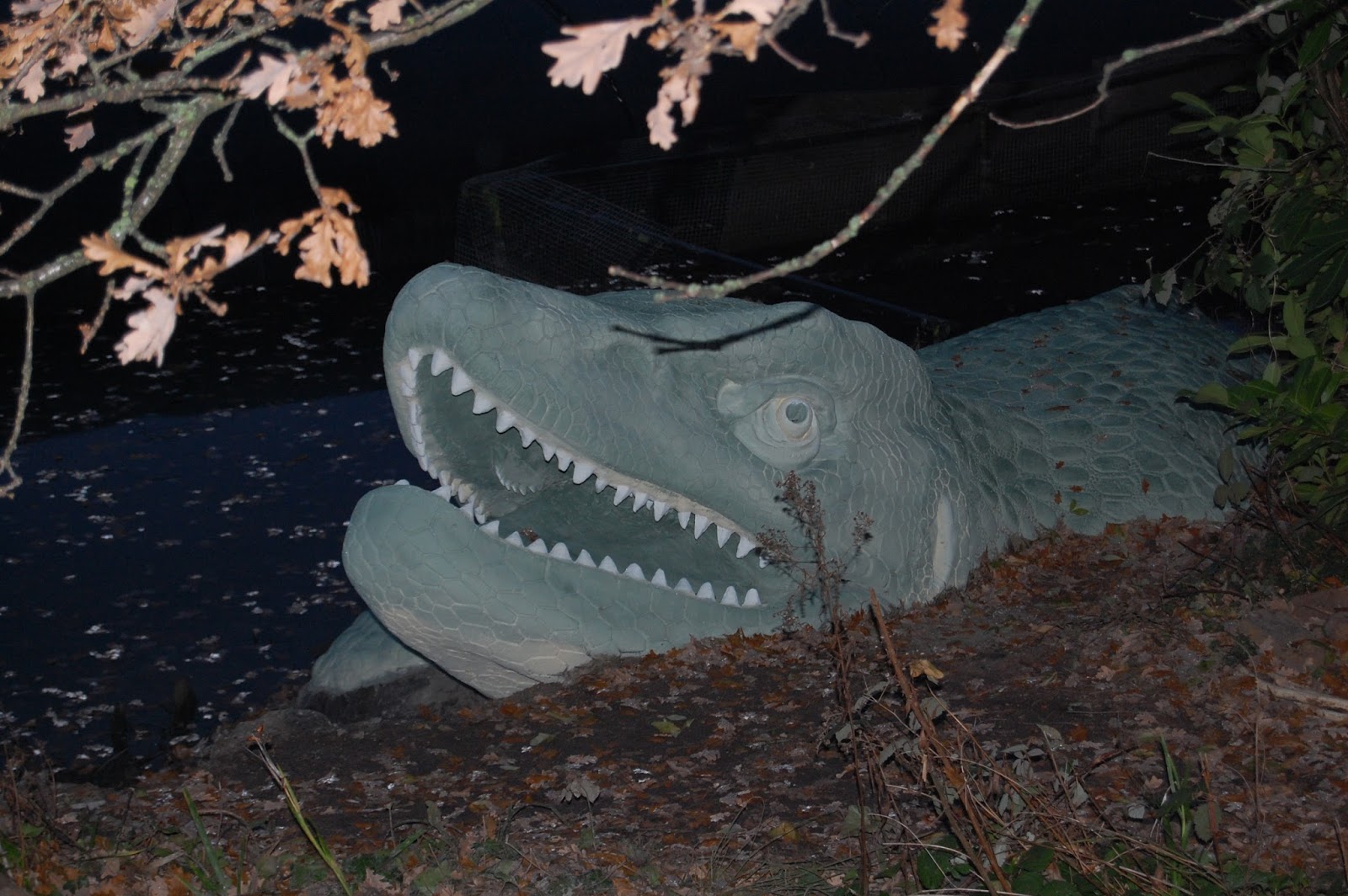
Mosasaurus
Note the second set of teeth inside
Iguanadon


Pteradactylus x2

Lord of Chaos inspecting Iguandon's bum

Inside brick-built Iguanadon
(This is where they put the steam motor in my story)

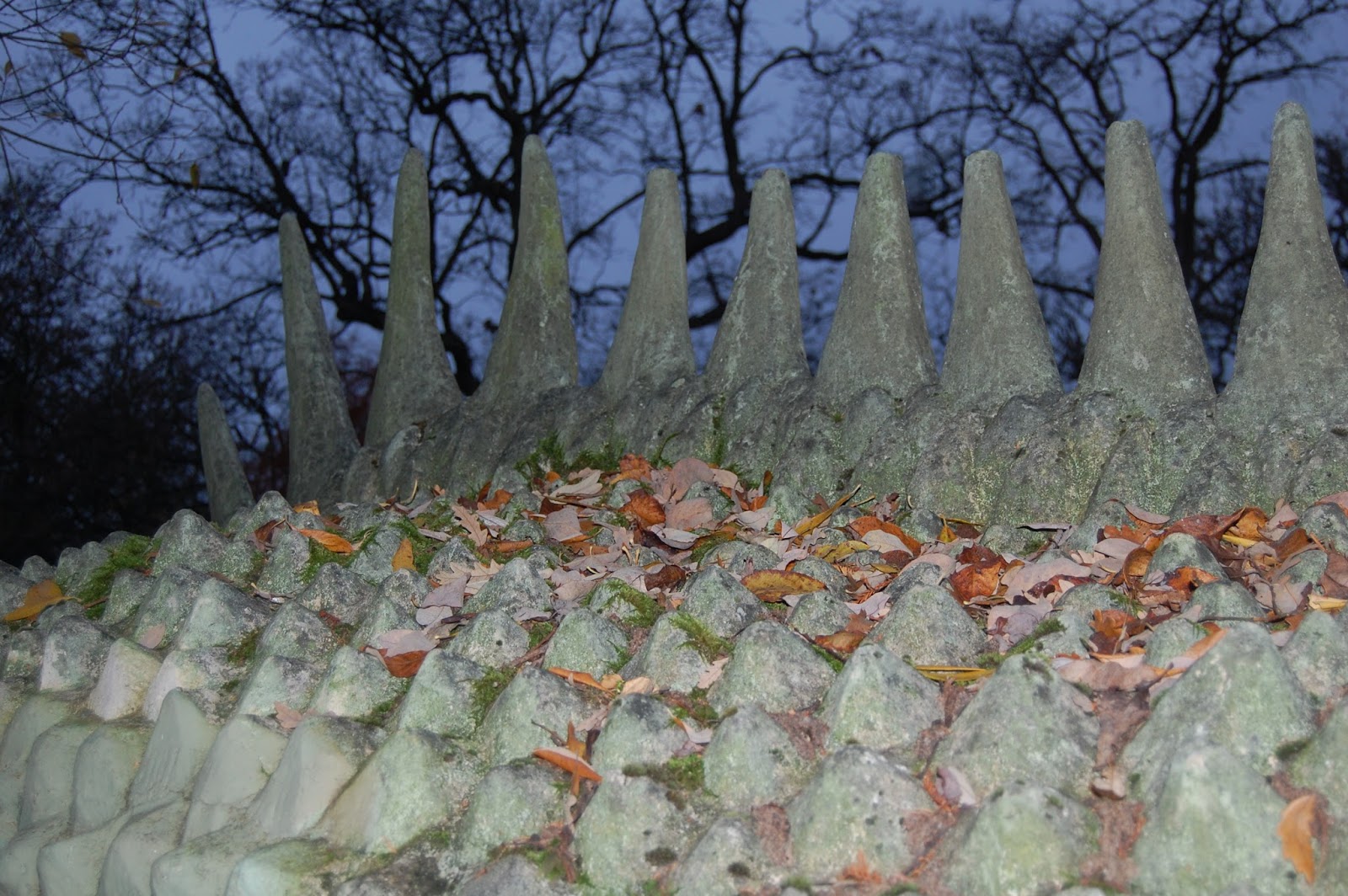
Hylaeosaurus spines

Megalosaurus

Teleosaurus x2, and Christmas presents

Megalosaurs eyeing up Hylaeosaurus
and 2x Iguanadon

Iguanadons chillax

The relative sizes of claws

Iguanadon, mid anecdote

An Iguanadon, surrounded by lunch

Mosasaurus waving us goodbye - note those secondary teeth

The Dr, in her best clothes
See also Doctor Who in Crystal Palace.

Monday, October 31, 2016

Invasions of Earth

The new issue of The Essential Doctor Who is out now, devoted to Invasions of Earth - Alien Threats from Beyond the Stars. It includes some of my typing.

"I think Anat was one of the first women in uniform to be seen leading a gang on television," Anna Barry told me about her part in Day of the Daleks (1972). She also explained how a nearly fatal car crash helped her to be cast.

"The Doctor knows what he's talking about, at least for 1974..." says paleontologist Dr Dave Hone who I made watch Invasion of the Dinosaurs with its famously realistic-looking model effects. Ahem. Dave is the author of the brilliant The Tyrannosaur Chronicles and I'm still haunted by the talk I saw him give in 2013 on the "Planet of the Dinosaurs", with its vivid imagery of chicken-sized, feathered dinsoaurs running through magnolia blossom and between rhododendons.

Pamela Salem, David Richardson and John Dorney told me about making spin-off series Counter-Measures as "audio in black and white".

And Toby Whithouse explained how he spent his childhood "hoping and praying" that his school would be invaded by monsters.

Tuesday, March 03, 2015

Irregularity signing, Forbidden Planet this Saturday

JOIN JURASSIC LONDON AT FORBIDDEN PLANET FOR THE BEST IN CONTEMPORARY SCIENCE FICTION AND FANTASY – taking place the London Megastore on Saturday 7th March from 1- 2pm!

During the Age of Reason, the world’s greatest minds named, measured and catalogued the world around them.

They brought order and discipline to the universe. Except where they didn’t. Irregularity collects fourteen original stories from extraordinary literary voices, each featuring someone — or something — that refused to obey the dictates of reason: Darwin’s other voyage, the secret names of spiders, the assassination of Isaac Newton and an utterly impossible book.

• Tiffani Angus • Rose Biggin • Richard Dunn • Simon Guerrier • Nick Harkaway • Roger Luckhurst • Adam Roberts • Claire North • Gary Northfield • Henrietta Rose-Innes • James Smythe • M. Suddain • E.J. Swift • Sophie Waring

Come and meet the authors of this marvellous collection, have a chat, grab yourself a signed and enjoy the company – this won’t be formal event, just a chance to find some fabulous fiction!

Friday, July 04, 2014

Irregularity

Earlier this week, the nice people at Jurassic London announced the contents of forthcoming anthology Irregularity - which I'm thrilled to have an story in. Here's what they said:

Irregularity is about the tension between order and chaos in the 17th and 18th centuries. Men and women from all walks of life dedicated themselves to questioning, investigating, classifying and ordering the natural world. They promoted scientific thought, skepticism and intellectual rigour in the face of superstition, intolerance and abuses of power. These brave thinkers dedicated themselves and their lives to the idea that the world followed rules that human endeavour could uncover... but what if they were wrong?

Irregularity is about the attempts to impose man's order on nature's chaos, the efforts both successful and unsuccessful to better know the world.

Fom John Harrison to Ada Lovelace, Isaac Newton to Émilie du Châtelet, these stories showcase the Age of Reason in a very different light.

This anthology is published to coincide with two exhibitions at the National Maritime Museum taking place in 2014: a major exhibition on the story of the quest for longitude at sea and a steampunk show at the Royal Observatory. The Museum is also our partner for the publication of Irregularity, including access to their archives for materials, imagery and inspiration.

CONTENTS:
"Fairchild's Folly" by Tiffani Angus
"A Game Proposition" by Rose Biggin
"Footprint" by Archie Black
"A Woman Out of Time" by Kim Curran
"The Heart of Aris Kindt" by Richard de Nooy
"An Experiment in the Formulae of Thought" by Simon Guerrier
"Irregularity" by Nick Harkaway
"Circulation" by Roger Luckhurst
"The Voyage of the Basset" by Claire North
"The Assassination of Isaac Newton by the Coward Robert Boyle" by Adam Roberts
"Animalia Paradoxa" by Henrietta Rose-Innes
"The Last Escapement" by James Smythe
"The Darkness" by M. Suddain
"The Spiders of Stockholm" by E. J. Swift
Afterword by Sophie Waring and Richard Dunn, Head of Science and Technology at Royal Museums Greenwich

Illustrations by Gary Northfield and the National Maritime Museum

Cover by Howard Hardiman

Edited by Jared Shurin

THE LIMITED EDITION
Irregularity will also be available as a limited, hand-numbered, hardcover edition. The "Meridian Edition" is a quarter-bound volume in the traditional 17th century duodecimo size, on 120 gsm paper and complete with decorative ribbon, coloured endpapers and head and tail bands.

The Meridian Edition is available exclusively through the National Maritime Museum.

DETAILS
Published 24 July 2014

Hardcover (100 numbered copies): £29.99 (coming soon)
ISBN: 978-0-9928172-2-0

Paperback: £12.99
ISBN: 978-0-9928172-1-3

Kindle: Coming soon
Kobo: Coming soon
Spacewitch: Coming soon
ISBN: 978-0-9928172-3-7

Find it on Goodreads

EXTRAS
Join us at the launch - "Dark and Stormy Late" - at the National Maritime Museum on 24 July.

"Calling irregular authors!" - background on the project and an introduction to the 2014 exhibitions from the National Maritime Museum.

"Longitude Punk'd" - a selection of objects to inspire the upcoming exhibition, selected from the Museum's archives.

The Board of Longitude archive - now available online through Cambridge University Library, the National Maritime Museum and the Board of Longitude project.

Friday, August 23, 2013

Victorian dinosaurs

Earlier this week, the Dr pointed me in the direction of Professor Joe Cain's splendid talk on the dinosaur sculptures at Crystal Palace, which you can watch here:


It's a great talk with some amazing insights and pictures - including of the insides of the dinosaurs. I love those dinosaurs and visit them a lot. (They've also appeared twice on the cover of Doctor Who Magazine.)

Then, last night, Nimbos and I attended "Planet of the Dinosaurs", a talk at the Royal Observatory Greenwich, where Dave Hone, paleontologist from Queen Mary gave a history of the dinosaurs as, on the vast Planetarium screen, Earth's continents shifted before our very eyes.

My favourite fact of the evening was about the very well preserved fossils found in Liaoning province in northern China. Paleontologists have not only found the remains of small, feathered dinosaurs, they also know the fauna and weather. In the cool drizzle, dinosaurs would have run through the magnolia blossom and between rhododendrons. Exactly the plants and weather of a Victorian garden - or the Crystal Palace.

Troodon formosus and Magnolia by John Conway

Friday, September 14, 2012

The Plotters - in cinemas!

Hooray! Our short film "The Plotters" made the shortlist of the Virgin Media Shorts 2012 competition - and is now playing in cinemas around the country, as well as being online and on the OnDemand service and things.We are thrilled.

Brother Tom (the director) and I attended the bash in Hackney last night to see the shortlisted films on the big screen and natter to the other entrants. I even got to say hello to Andrew Lee Potts (director of "Little Larry"), who I last met on the set of Primeval when I was writing my book.

Excitingly, the Virgin team also had posters made for each of the 13 shortlisted films, and we're delighted with our own (see right).

As well as seeing it on the big screen, you can also watch “The Plotters” for free online, on TV (via Virgin Media's On Demand service and its Shorts Tivo® app) and on your mobile phone (on Virgin's brand new Shorts iPhone app). “The Plotters” and the other 12 selected shorts now compete for £30,000 of funding towards the production of another film, as well as other prizes that will be announced in November. You can vote for your favourite of the shortlisted films, either on the Virgin Media Shorts Facebook page or by tweeting the film's name with #VMShortsVote.

I'll write up a full making-of about the film when I've conquered some pressing deadlines. But in the meantime, Tom has overhauled the Guerrier brothers website and there's loads of material on "The Plotters" with which to amaze your eyeballs.

Sunday, May 27, 2012

Three Footnotes from Cosmos

Thanks to lovely Abebooks, I'm now the proud owner of a battered paperback of Carl Sagan's Cosmos and a battered hardback (without dust jacket) of James Burke's Connections – and both for less than a fiver, including P&P. Bargain.

I've been working my way through the TV version of Connections on Youtube and will blog about it more when I get to the end (at my current rate, sometime towards the end of the century). But for a flavour of its style and confidence, you can't beat this extraordinary piece to camera:


I've not seen all the TV version of Cosmos but a lot of the material was covered in my astronomy GCSE, so reading the book has been a bit of a refresher course. It's a history of science, similar to The Ascent of Man, but focusing on our knowledge of astronomy.

It's striking how much has been learned and achieved in the 30 years since the book came out. Sagan details Voyager's exciting new discoveries about the Galilean moons but can only guess at the nature of Titan. He enthuses about the possibility of sending roving machines to explore Mars. He speculates on the causes of the Cretaceous-Tertiary extinction event (which wiped out the dinosaurs), but doesn't mention the possibility of a large meteorite hitting the Earth. That's especially odd given that elsewhere he talks about the probabilities of large meteorite impacts, such as in Tunguska in 1908.

Sagan packs in fascinating titbits and detail, such as Kepler's efforts to save his mum from being tried as a witch. Excitingly, it's got footnotes instead of endnotes (and an index – so top marks all round), which means plenty of extra nuggets of fact to explode your brain.

For example, Sagan talks at one point about the scale of the Solar System, reminding us that, in terms of our ability to traverse it, the Earth was once a much bigger place. And then he drops in another striking analogy:
“In the seventeenth and eighteenth centuries you could travel from Holland to China in a year or two, the time it has taken Voyager to travel from Earth to Jupiter.* 
* Or, to make a different comparison, a fertilized egg takes as long to wander from the Fallopian tubes and implant itself in the uterus as Apollo 11 took to journey to the Moon; and as long to develop into a full-term infant as Viking took on its trip to Mars. The normal human lifetime is longer than Voyager will take to venture beyond the orbit of Pluto.”
Carl Sagan, Cosmos, p. 159. 
Like James Burke, Sagan is good at making a connection between two apparently disparate things to create a sense of wonder. But I like how the last sentence of the following footnote so lightly declines to impose or invent a reason:
“The sixth century B.C. was a time of remarkable intellectual and spiritual ferment across the planet. Not only was it the time of Thales, Anaximander, Pythagoras and others in Ionia, but also the time of the Egyptian Pharaoh Necho who caused Africa to be circumnavigated, of Zoroaster in Persia, Confucius and Lao-tse in China, the Jewish prophets in Israel, Egypt and Babylon, and Gautama Buddha in India. It is hard to think these activities altogether unrelated.”  
Ibid., p. 206.
And, again like Burke, Sagan is good at accounting for chance and circumstance in the slow, steady progress of science through the ages. He uses a Tlingit (Native American) account of meeting the French explorer Count of La Pérouse when he “discovered” Alaska in the 1780s to discuss what first contact with an alien culture might be like. But, explaining that La Pérouse and all but one of his crew died in the South Pacific in 1788, Sagan notes:
“When La Pérouse was mustering the ship's company in France, there were many bright and eager young men who applied but were turned down. One of them was a Corsican artillery officer named Napoleon Bonaparte. It was an interesting branch point in the history of the world. If La Pérouse had accepted Bonaparte, the Rosetta stone might never have been found, Champollion might never have decrypted Egyptian hieroglyphics, and in many more important respects our recent history might have changed significantly.” 
Ibid. p 334. 
Three short asides, additional to the main narrative, and you could base a science-fiction novel on each of them. Yet the thing that's stayed with me most since I finished the book earlier this week is his reference to the 1975 paper “Body Pleasure and the Origins of Violence” by James W Prescott:
“The neuropsychologist James W. Prescott has performed a startling cross-cultural statistical analysis of 400 preindustrial societies and found that cultures that lavish physical affection on infants tend to be disinclined to violence ... Prescott believes that cultures with a predisposition for violence are composed of individuals who have been deprived – during at least one or two critical stages in life, infancy and adolescence – of the pleasures of the body. Where physical affection is encouraged, theft, organized religion and invidious displays of wealth are inconspicuous; where infants are physically punished, there tends to be slavery, frequent killing, torturing and mutilation of enemies, a devotion to the inferiority of women, and a belief in one or more supernatural beings who intervene in daily life.” 
Ibid., p. 360.
I'm fascinated by this, but can't help wondering if that conclusion isn't too much what we'd like to believe to be true. There's something chilling, too, in the lightness with which he seems to suggest that organised religion is a symptom of childhood neglect.

Thursday, January 19, 2012

AAAGH! in the air!

An action-packed AAAGH! from issue #251 of Doctor Who Adventures, available until yesterday. It might owe a little to the opening sequence of The Doctor, The Widow and the Wardrobe. Script by me, art by Brian Williamson and edited by Paul Lang and Natalie Barnes who gave kind permission to post it here. You can also read all my AAAGH!s.

The new issue out today has a splendid AAAGH! by Paul Lang, and also photographs of the Whomobile, Meglos and Quatermass.

Sunday, July 24, 2011

Jaunt

Had a nice couple of days' escape from London before our building work starts in earnest. Went to Ely for the afternoon, mooched round the cathedral and Cromwell's House (I was there in 2007, too), then fell into a pub.

Cromwell's House, Ely
Spent the evening in Cambridge eating pizza at Torchwood, and next morning did the Sedgwick -

Dinosaur at Sedgwick Museum, Cambridge
- and Fitzwilliam museums.

Lions outside Fitzwilliam Museum, Cambridge
The Dr loved the newly redesigned Greek and Roman bits, and I found some beautiful Augustus John landscapes and even a sculpture by Eric Gill. So that was nice.

Thence lunch with A. and A. and a trip to the Polar Museum, with its ceiling maps of the poles by Gill's brother MacDonald. The museum is mostly now about the indigenous peoples of the Arctic, but there's plenty of material on polar exploration by Europeans, and the story of Scott's ill-fated mission still packs one hell of a punch.

Spent the afternoon punting and pottering (I found the alleyway from Shada / The Five Doctors). The Fort St George pub has carved ladies behind the bar that seem to be slightly naughtier versions of the caryatids.

Naughty Caryatid at Fort St George, Cambridge
Then went to dinner at Cotto which was, frankly, amazing.

Next day we schlepped back to London and mooched round the Out of this World exhibition at the British Library, which is packed with detail. Rather pleased I'd read the majority of the key texts, though think it misses a trick by not addressing issues of race and class that are often so implicit in ideas of the "alien". And it still seems strange to see a sci-fi exhibition feature lots of Doctor Who but no Star Trek (though my teenage self would have cheered).

Looked through the windows of the Gilbert Scott restaurant which the Dr would like a trip to for her birthday. Instead we had a drink in the bar at St Pancras, where the service was immaculate. Went for a pee, though, to find this lady staring down at me.

Opera-glasses woman in the gents at St Pancras
Home to feed the cats and then out to dinner with @classicdw to tweet all about Robot - Tom Baker's first story as Doctor Who. Lovely tea afterwards and then home. Done some rewrites this morning and now off to a birthday party, with a long week of typing and building work to come.