Showing posts with label joker. Show all posts

Thursday, October 02, 2025

Barry Cryer Same Time Tomorrow, by Bob Cryer

This is a lovely, funny and often moving biography of the comedian Barry Cryer (1935-2022) written by his youngest son. Each chapter is preceded by one of Cryer’s well-worn jokes, which I could easily hear in his distinctive, warm gravel tones. There are more great jokes peppered through the text, as well of bits of showbiz history and gossip. 

There are, too, some shocking moments such as the time Cryer tried to end his own life and was saved by his neighbour Douglas Camfield — then assistant floor manager on TV shows such as Garry Halliday and later a celebrated director on Doctor Who and other drama. But really this is a history of a hardworking, professional writer and performer plugging away at his trade as the entertainment world changed around him.

In early 1961, while still relatively green, Cryer and his friend Ted Dicks (no relation to Terrance, though their credits sometimes get muddled up) began writing for revue show This is Your Night Life. The show was headed by Danny La Rue, who we’re told described himself as a “female impersonator” rather than “drag artist”, and it was performed at Winston’s nightclub in London where La Rue had been in residence for some years. 

“Shows usually started at 12.45 am, meaning they often finished around 3 am. Almost all the performers, including Danny, had jobs in other West End shows and came to Winston’s afterwards” (p. 108)

The cast of This is Your Night Life included Terry Donovan, who Cryer married in 1962. Their son describes them cycling from their home in Maida Vale to rehearsals for Danny La Rue during the day. Terry would then cycle to her evening show in the West End and her husband would be off to a stand-up gig at the Players’ Theatre. They’d then head to Winston’s for 11 pm for their next performance, get home in the not-so-small hours and then do it all again, night after night after night. It’s exhausting and thrilling and mad. You can smell the cigarette smoke and tiredness.

Cryer Jnr says his dad was an almost perfect match for revue shows of this kind, given the OED’s definition of revue as “a light theatrical entertainment consisting of a series of short sketches, songs, and dances, typically dealing satirically with topical issues.” The fit was almost perfect because, “to my knowledge Strictly Come Dancing never called” (p. 78). 

To Cryer Jnr, that’s because revue matched his father’s love of “professional amateurism”, that mix of spontaneity and chaos where it seems as if the wheels might come off at any moment. I know exactly what he means, having grown up on Cryer Snr’s work with Kenny Everett on TV and hearing him on I’m Sorry I Haven’t a Clue on the radio. In fact, Cryer Jnr is good on why the late-night revue show on stage morphed into the panel show on radio and TV.

“The Theatres Act of 1968 meant that the Lord Chamberlain no longer had the power to censor the West End and a new kind of liberated and more confrontational voice was now being heard. Innuendo, that great staple of cabaret and Danny’s nightclub shows, not to mention one of Dad’s great weapons (if you pardon the, ahem, innuendo), was now seen as quite quaint.” (p. 174) 

The panel show, and Kenny Everett, allowed the informal, wheels-coming-off to continue in new guise.

Given Cryer Snr’s prolific career, of the many shows in different media mentioned in the book there’s a single, brief reference on p. 182 to Better Late…, a revue show broadcast over nine weeks on BBC Radio 4 in the summer of 1970, filling the gap while Any Answers? was on holiday. 

By Cryer Jnr’s reckoning of revue shows as given above, that mean it was a bit quaint, though BBC audience research reports from the time suggests that listeners were still uncomfortable — even outraged — to hear politicians being very lightly mocked.

Cryer didn’t write for the series; he was one of the performers led by Peter Reeves. Reeves also co-wrote the scripts with his friend Terrance Dicks — NB not, this time, Ted.

So, here’s some of what I can add about this long-forgotten revue show:

Better Late… was a kind of summer holiday for Terrance, who’d just completed work as script editor on Jon Pertwee’s first series as Doctor Who — the final episode of closing story Inferno, directed by Douglas Camfield (and, uncredited, by Barry Letts) was recorded on 29 May and went out on 20 June. Terrance duly commissioned scripts for the next series of Doctor Who and must have co-written this revue show while waiting for those scripts to come in. 

On Tuesday 7 July, Robert Holmes delivered his scripts for what was then called The Spray of Death, the debut story of Doctor Who’s 1971 series. The following day, Reeves, Cryer, Elizabeth Morgan and Bill Wallis, with producer John Dyas and I assume co-writer Terrance, rehearsed the first episode of Better Late… ahead of recording in the Paris studio at BBC Broadcasting House that evening, accompanied by the Max Harris Group and announcer David Dunhill. The show went out at 7.30 pm the following evening.

The pattern was basically the same for the next eight weeks.

Sadly, Better Late… no longer survives in audio form but the scripts are (mostly) held by the BBC’s Written Archives Centre. Since the revue show was topical, a lot of the material must have been written the week of recording and transmission, and skips in page numbering on surviving script pages suggests that a lot more material was written than used. The scripts also include many handwritten rewrites — refinements and rephrasings, whole jokes added or cut, the swapping of roles between performers. The sense is of a lot of work, right up to the last possible moment.

Terrance formally accepted draft scripts from Don Houghton for what was then called The Pandora Machine — the second story of the 1971 run of Doctor Who — on 2 September, the same day he was in rehearsals on the ninth and final episode of Better Late… The following week, finished on Better Late..., he completed edits on the scripts for The Spray of Death so it could go into production, received a storyline from Malcolm Hulke for the third story in the run, and commissioned Bob Baker and Dave Martin to write scripts for the fourth story.

So, he finished work on the 1970 series of Doctor Who, which had been something of an ordeal, plunged into this demanding radio series and then went straight back to Doctor Who. Exhausting, thrilling, mad! 

Friday, January 30, 2009

Claque!

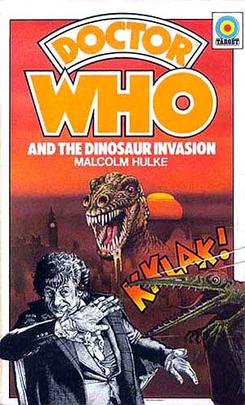
(No, not kklak!)

To the Coach and Horses on Tuesday (or to a Coach and Horses, since there’s a whole myriad gang of them in London), where m’colleague Will Howells was one of 11 brave entrants in that night’s heat of the Laughing Horse New Act of the Year 2009 competition.

I hate having to stand up and speak in front of people, and thought being a writer would mean someone else would always do that bit. But part of the gig is flogging the product and I’ve developed a technique of talking too fast and about not very much and so generally sort of scrape through.

Which means I’m in awe of these brave ladies and gentlemen who dared try their comedy on people they don’t even know. There’s no grey area in telling a joke: people either laugh or sit in hollow silence. Even a slight titter or knowing smile can cut the teller apart. It’s excruciating enough with an audience already on your side.

Each turn got exactly five minutes before being dragged back into the darkness. Will was, I’m relieved to say, quite brilliant – and easily leapt through into the next round of the contest.

There were several very good other acts, too. And some that failed to ignite our cruel mob. When I should have been fighting to meet pressing deadlines, I’ve been trying to fathom just why.

1. Working the audience
Several acts started with a cheery, “How you doing, all right?” The smallish audience didn’t have the anonymity to call back, so met the comic with an uncomfortable murmur. You could see it the comics’ eyes: stood there in front of the microphone and it already not working.

2. Watch the opposition
That happening to one comic would have been bad enough, but it happened again and again. So, watch the other acts and don’t do what they didn’t make work. And if the audience doesn’t respond to your first cheery hello, don’t then spend the rest of your act asking the audience questions: “Who’s in love?”, “Who’s from London?”, “Who here has their own nose?” Answer came there none.

3. Why do women wear make-up and perfume?
There were a lot of jokes at the expense of women – about shopping and smear tests and sex. When these worked at all they were being told by women. It helps to get us on side if you’re mocking yourself rather than pointing at other people.

4. Rude ≠ funny
There were also a lot of jokes aimed at shocking us – about bowel movements or the evils of women. Shocks are like exclamation marks; they work if you use them with caution. Too much and you deaden their impact. You might as well write out your act in the Comic Sans typeface to show us how cray-zee it is.

5. Keep us busy
Some acts made observations that weren’t exactly funny. Others spent their allotted five minutes setting up one joke. We need a steady stream of funny bits; small woofs peppered between the big ones. Keep us engaged and surprised and we will be grateful.

6. Relevant
A lot of acts tried to be topical – with mentions of Obama or the credit crunch. At worst, these just felt tacked-on to the pre-arranged act, or just obvious and lame. Every comic on the telly, every paper, every wag at work, is doing their spin on the news. So your joke has to be something amazing to stand above the crowd.

7. Funny = smart
There’s an important difference between silly and stupid. A lot of comedy seems to work on the basis of “Isn’t subject X stupid?” Which subject X is, especially when you wilfully distort it. The late Douglas Adams, who made his name fondly mocking science and philosophy, found himself falling out of love with comedy as a result of, in his own words:
“hearing a stand-up comedian make the following observation. "These scientists eh? They're so stupid! You know those black box flight recorders they put on aeroplanes? And you know they're meant to be indestructible? It's always the thing that doesn't get smashed? So why don't they make the planes out of the same stuff?" The audience roared with laughter at how stupid scientists were, how they couldn't think their way out of a paper bag, but I sat feeling uncomfortable. Was I just being pedantic to feel that the joke didn't really work because flight recorders are made out titanium and that if you made planes out of titanium rather than aluminium they'd be far too heavy to get off the ground in the first place?”

Douglas Adams, “The hitchhiker's guide to the 21st century”, The Independent, 19 December 2000.

Saturday, July 19, 2008

I have a name for my pain

M. rather marvellously smuggled me into the IMAX last night for a press screening of The Dark Knight. It's a huge, 2.5 hour epic full of thrill and excitement, and six whole scenes of especially IMAX-tastic hugeness. Golly.

Long-toothed readers of this blog may recall my review of Batman Begins for Film Focus, where I dared suggest the general cool marvellousness was a little dulled by the lack of good roles for women. Rachel, now played by Maggie Gyllenhaal rather than Mrs Tom Cruise, seems to agree. She's now shacking up with Harvey Dent, the cool district attorney and white knight to the city – a man who's everything Bruce/Bats can't be.

But Harvey doesn't just want Bruce's girl, he also wants in on Batman's crusade to bring down the Gotham mob. The mob, led by my old mate Eric Roberts (well, I met him once), is a bit cheesed off by all this and then find themselves being made an offer they can't refuse by a kray-zee new kid called the Joker.

The late Heath Ledger's performance has been the focus for a lot of reviews so far, and it's an eye-popping, compelling and terrifying thing. Yes, Ledger should get an Oscar nomination, but then Nicholson should have had one for the same role 19 years ago. To my delight, there's no (single) explanation for where the Joker comes from here or what unhinged him. He's all the more appalling for not being explained. While Bats and Bruce and all their good-guy pals wrangle over how and when they can bend their own rules, Joker's an anarchic live-wire just in it for the explosions. The violence comes without warning; it's a shocking, brutal film and not all the regulars will be back for the third one.

As I argued with the first one, comic-book movies are all about reshuffling the established genre rules and conventions so that they come out looking new. The Dark Knight is a lot more complex, rich and full of strange moral ideas than it has really any need to be, which give the huge-scale set pieces and fast-cut fighting that much more of an edge.

It's still relentlessly male. There's really only two women in it besides Rachel: Jim Gordon's colleague Ramirez and his wife Barbara. And, I'd argue, both are there because of what they add to Jim, rather than having roles and motives of their own.

Yet it's notable that our regulars are faced with these reflections; their motives and behaviour is constantly being questioned by all sides. This doesn't bolster one particular viewpoint that comes with all the answers (as in Socratic dialogue) as to continually muddy the water. The film has plenty to say about vigilantes and civil liberties, but from lots of different voices. Batman and the goodies give their best to the cause, but the question hanging over them through it whether that best is good enough.

Batman Begins seemed to be riffing of stuff in old comics Year One and The Long Halloween. This nicks elements from The Dark Knight Returns and, I'd argue, The Killing Joke. Spider-Man has already done the hero as emblematic of the city at large, an inspiration to ever more kray-zee super-villains and yet also to the noble instincts of the city's people. There's a nice prisoner's dilemma late on in this (which I won't spoil here) that hangs on how Joker – and Batman – expect people to behave.

It reminded me of Midnight in that it's not just the predicament that's so horrifying but how characters react to it. The result, though, felt a bit too plot convenient rather than earned: two characters respond in way that's surprising because it's not consistent with what little we know about them...

That makes it sound like a criticism, but it's less a niggle as it having been swimming round my feeble brain all day. While I'm meant to be writing my own set-piece action adventure I'm tonguing the sore-tooth of the film's “message”. I'm not sure it has one. Does Batman win at the end? Are things any better for his having been involved? How thrilling, innovative and bold that such a mainstream movie doesn't seem to know...